السبت، 5 سبتمبر 2015

Closure on K2: Video prompts Texas woman's journey to Pakistan slope to find bodies of father, brother


A grim warning underscored by a haunting image from the world’s second-tallest mountain left one viewer of adventurer Mike Horn’s slick Facebook videodumbstruck – and launched her recent quest for closure for herself and others whose loved ones died trying to scale the treacherous peak.
“If you are not 100 percent ready, the mountain is going to kill you,” Horn, an internationally known sportsman and motivational speaker, intoned as a stylized ax sliced dramatically through the northern Pakistan mountain and the camera lingered briefly on a partially preserved head lying on a glacier.
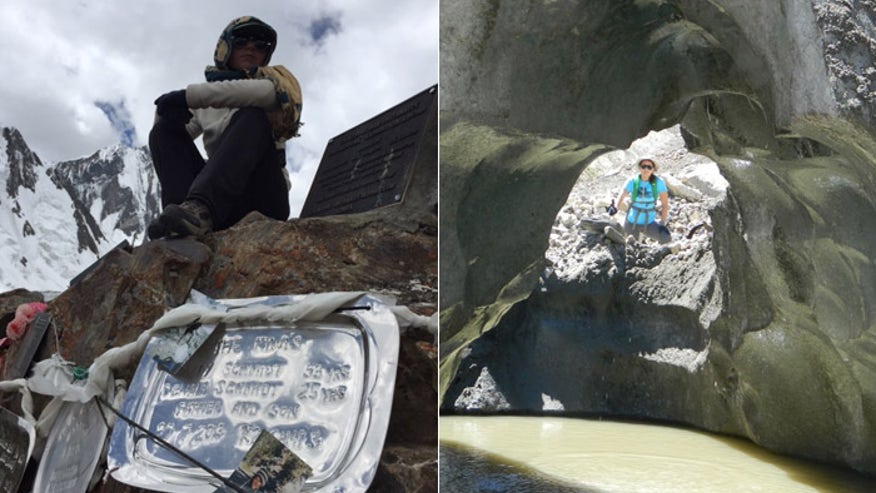
For Sequoia Di Angelo, 24, of Houston, the image on the video posted in July was almost too much to bear. Two years ago, her father and brother died on the mountain and their bodies were never recovered.
“I immediately thought, ‘Oh my God, that’s my brother’s head,’” Di Angelo toldFoxNews.com. “I’m sure every family who lost someone on that mountain thought the same thing and experienced the same sick feeling in seeing that.”
“I immediately thought, ‘Oh my God, that’s my brother’s head.’”
- Sequoia Di Angelo
Di Angelo’s father, Marty Schmidt, 53, and her brother, Denali, both experienced climbers, died in an avalanche on July 26, 2013, while trying to become the first father-son team to successfully scale the 28,251-foot peak. K2, on the China border, may not be as tall as Mount Everest, but while 4,000 have conquered Everest, just 377 have seen the top of K2. The avalanche added the Schmidts to a roster of at least 82 who have died trying to reach the summit.
The trip by Horn, who has performed a string of “extreme adventure” feats, including a solo circumnavigation of the Arctic Circle and a journey to the North Pole with without the aid of dogs or machines, was sponsored by Mercedes-Benz. The fact that it was scuttled due to harsh weather is testament to K2’s dominance of man, but the image that shocked Di Angelo bothered others, as well.
Read More ->>

Volcano zone reservoirs could hold huge amounts of gold and silver


The heat is on for prospectors in what could be the next gold rush. According to a recent study in the journal Geothermics, a team of geologists has discovered a mother lode of gold and silver inside super-heated reservoirs within New Zealand’s Taupo Volcanic Zone. Extreme heat from the volcanoes’ magma plumes is heating water, producing acidic underground reservoirs and springs that in turn dissolve the surrounding rock. This then allows the embedded gold and silver to come loose and collect in the water. If successfully drilled, one well could yield as much as $2.7 million in gold a year.
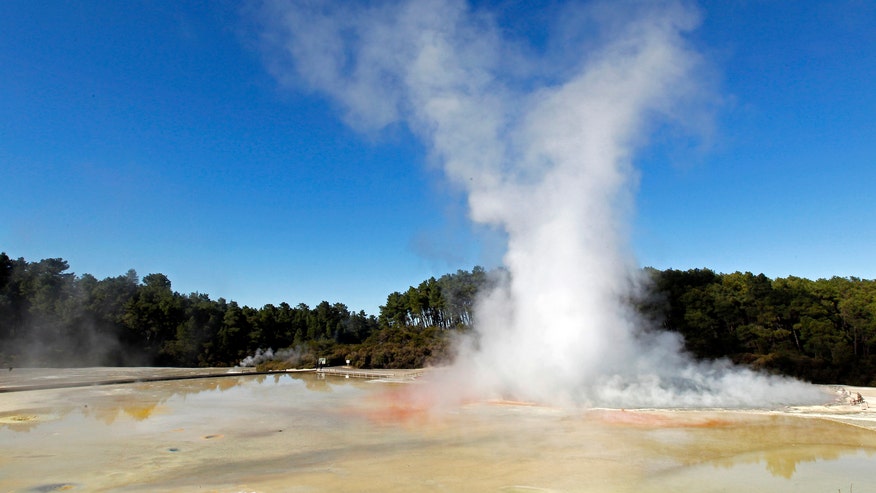
According to lead study author Stuart Simmons, a research professor at the University of Utah’s Energy & Geoscience Institute, gold and silver depositing in hot springs and geothermal wells is nothing new. Apparently this was first discovered over 50 years ago, with New Zealand’s ‘Champagne Pool’ hot spring one of the only places in the world where tourists can actually see this phenomenon happen.
“If you Google ‘Champagne Pool’ online, you will see photos of the striking orange-colored precipitates that deposit around the edge of the pool,” Simmons told FoxNews.com. “Those precipitates are rich in gold, silver, mercury, thallium, arsenic and antimony.”
The road to this new discovery began 15 years ago, when Simmons and a colleague constructed a special device to lower down wells up to 1.8 miles deep, obtaining hot samples of thermal water to determine the concentration of precious minerals.
“After about 5 years, we had some preliminary data on which to make assessments of the amounts of precious metals that might be available,” he recalled. Their work paid off, with the amounts of aqueous gold and silver found in the 18 reservoirs estimated to be tens of thousands of ounces of gold and hundreds of thousands of ounces or more of silver. Now, all they need to do is figure out a way to mine it, which is no easy task considering new equipment would have to be developed that could take the heat (the chloride-rich waters in the underground reservoirs can get as hot as 752 degrees Fahrenheit) and also ensure lasting production.
“It is not really practical to mine gold and silver in a traditional sense inside the geothermal areas,” Simmons said. “Hot boiling water would be encountered in shallow excavations and there would be considerable environmental impact to deal with.”
He explained that there currently isn’t much interest in figuring out ways to mine the minerals since it would disrupt energy production, what with the wells being drilled for steam to power turbines and generate electricity. One solution that was proposed in the study was to mine the reservoirs in intervals after enough gold and silver had accumulated so as to make the disuse of the steam-field worthwhile.
“The more practical thing to do is to attempt to extract the metals from the fluids as they flow through the [existing] surface pipe work,” he said. “The gold and silver are passively accumulating in the shallow parts of the wells and in surface pipe work, so it is not lost.”
So if the new tech is developed, who will reap the financial benefits? Not the researchers who made the discovery – they were in it strictly for the science, according to Simmons.
“The team did the work mainly to get a better understanding of processes of gold and silver deposition in ancient hydrothermal systems that are no longer active but that are host to ore deposits,” he said. “There are many such deposits forming mines and prospects around the Pacific Rim (Japan, Philippines, Indonesia, Papua New Guinea, New Zealand, Chile, Peru, Ecuador, Mexico, and the western US). So the aim was to apply our understanding to new discoveries.”
Simmons worked in conjunction with his colleagues at the University of Auckland, New Zealand on the study.
Read More ->>

الجمعة، 4 سبتمبر 2015

Ants are safer, more effective than pesticides, study says


There’s a new ant–agonist on the pesticide market. According to a reviewpublished in the Journal of Applied Ecology, trees protected by weaver ants have less pests, less plant damage, and show an increased yield when compared to trees sprayed with pesticides. The small, red tree dwellers are also cheaper to use and better for the environment.
What makes the weaver ants so effective is their ability to quickly respond and attack larger intruders. They’re categorized as a “superorganism,” which means that the colony functions like one organism, with individual ants acting as its cells and moving around independently. When an intruder enters their environment, the ants coordinate attacks via pheromones before taking the insect back to their nests of woven leaves to feed the colony. With the crops hanging so close to the nests, they fall under the ants’ protection.
To put together his review, Aarhus University bioscience professor Joachim Offenberg pored over approximately 70 recent scientific studies on the use of ants as pest control on nine different crops against various pests in Africa, Australia, and Southeast Asia. One three–year Australian study revealed a 49 percent higher cashew yield in ant–protected trees versus those sprayed with pesticide. Not only that, but the cashews were of a significantly higher quality. Likewise, mango trees protected by ants produced a better quality crop. This, coupled with the ants being cheaper than pesticide, resulted in a 73 percent higher net income.

That’s not to say that similar results were reported across the board.
“There do exist a few cases where the ants alone are not the solution as some pests have adapted and can protect themselves against them,” Offenberg told Foxnews.com. “In these cases, the ants need to be supplemented with other control methods to obtain adequate control. This is called integrated pest management (IPM), when different methods are combined in the same agricultural system.”
Read More ->>

Study finds more sharks than ever swimming in waters along the East Coast


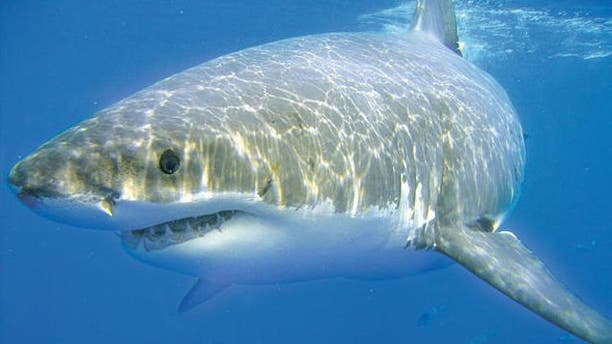
More sharks than ever are swimming along the East Coast, federal researchers announced this week, amid a busy summer in which a record number of the fish have attacked North Carolina beachgoers.
Scientists with the National Oceanographic Atmospheric Administration (NOAA) captured and tagged 2,835 sharks in waters from Florida to North Carolina in 2015, up from 1,831 in 2012 -- the last year the survey was completed. Scientists recorded the length, sex, age and location of each of the sharks caught. The survey has been ongoing for 29 years.
Lisa Natanson, a scientist at the Narragansett Laboratory of NOAA Fisheries’ Northeast Fisheries Science Center (NEFSC) and leader of the coastal shark survey, told FoxNews.com that the rise in the shark population is tied to federal regulations limiting commercial shark fishing, which were enacted in 1993.
“They took off a lot of fishing pressure of these species and it gives them a chance to come back,” Natanson said.
The survey – conducted every two to three years -- covers routes along the East Coast where many species migrate as waters become warmer, making it easier to keep tabs on the population, according to the NOAA.
Sandbar, Atlantic sharpnose, dusky, and tiger sharks were the most common amongst the 13 species caught this year onboard the 100-foot charter fishing vessel Eagle Eye II, which set sail from Port Royal, S.C. and  Ft. Pierce, Fla., from April to May.
Natanson told FoxNews.com that researchers – who used a line with baited shark hooks to catch the fish -- saw an uptick in numbers in waters off Florida.
“Usually we get a few here and there on the first few sets,” she said. “But we were getting a lot.”
The announcement comes in the wake of a string of shark attacks in North Carolina in June and July. Eight people were attacked -- the most in a year in since the Florida Museum of Natural History began tracking shark incidents 80 years ago. The previous high for North Carolina was five bites in 2010, The Virginian Pilot reported.
Despite the increased shark population, Natanson said beachgoers should not assume that there will be a rise in attacks, although “there is always going to be a risk.
“Just because there are a lot of sharks out there doesn’t mean there are going to be more coming in to bite people,” she told FoxNews.com, adding that the survey was conducted in areas where people were not swimming.
Around 2,179 of the sharks captured in the survey were tagged and released, 434 were brought aboard, and 222 were released untagged. The sharks that did not survive capture were dissected at sea to obtain biological samples for studies on shark age and growth, reproduction, and food habits, the NOAA said.
Read More ->>

الأربعاء، 5 أغسطس 2015

THOUSANDS FLEE 'HISTORIC' CALIFORNIA WILDFIRES


Some 13,000 residents are leaving their homes as nearly two dozen wildfires rage across drought-parched California.
More than 9,000 firefighters are trying to dampen the 21 conflagrations.
The biggest inferno, the Rocky Fire, jumped over a highway that had served as a containment line on Monday afternoon.                
It has reduced to smouldering ashes more than 62,000 acres (25,000 hectares) north of Sacramento, the state capital.
The blaze tripled in size over the weekend to almost 97 square miles (250 square km), feeding on its own winds.
The Rocky Fire, which is only 12% contained, razed 20,000 acres in just five hours, stunning the authorities.
"The term that I'm using is 'historic'," one firefighter told CNN.
"The reason I say that is that there are firefighters who have 25, 30 years on the job who have never seen fire behaviour like we've seen the last couple of days."
Two dozen homes have been destroyed over the past few days.
The California blazes killed a firefighter last week and injured four others.
A total of some 142,000 acres have burned so far.
The wildfires prompted California Governor Jerry Brown to declare a state of emergency last week.
Lightning strikes in the drought-stricken state were blamed for the fires.
Read More ->>

الثلاثاء، 4 أغسطس 2015

EATING SPICY FOOD LINKED TO LIVING LONGER


Eating spicy food has been linked to living a longer life.
A study analysed the food habits and health details of nearly half a million Chinese people.
It found those who ate spicy food six or seven days a week had a 14% reduced risk of dying compared with people who ate it less than once a week.
Eating spicy food was also associated with a lower risk of death from cancer, heart diseases and respiratory illnesses.
In women, it also corresponded with a reduced risk of death from infections.
The links were stronger in those who did not drink alcohol.
Researchers stressed the findings were correlational; eating spicy food may also be linked to other dietary habits, lifestyle choices or socio-economic status.
"For example, in Chinese cuisine the cooking of chilli pepper and the production of chilli sauce and oil usually requires more oil, and intake of pungent foods may be accompanied by an increased intake of carbohydrate-rich foods such as rice to relieve the burning sensation," they said.
The study, which is published in the BMJ, said spices have a long history of being used for flavouring, colouring and preserving food.
They have also been used for medicinal purposes.
The research, led by Peking University Health Science Center in Beijing, is in line with previous evidence on the health benefits of spicy foods.
The study authors said capsaicin is the main active component of chilli pepper.
Its qualities have been extensively reported in relation to anti-obesity, antioxidant, anti-inflammatory, anti-cancer, and anti-hypertensive effects.
Additionally, the antimicrobial function of spices, including chilli pepper, has long been recognised, they said.
Read More ->>

الاثنين، 3 أغسطس 2015

RUSSIA CLAIMS VAST SWATHES OF ARCTIC TERRITORY


Russia has submitted a bid for control of vast territories in the Arctic to the United Nations, its foreign ministry has confirmed.
Moscow said in a statement that it was claiming 1.2 million sq km (more than 463,000 sq miles) of the Arctic sea shelf, extending more than 350 nautical miles (around 650km) from the coast.
The US, Canada, Denmark, Norway and Russia have all been trying to gain control of parts of the Arctic, which is thought to have up to a quarter of the planet's untapped oil and gas supplies.
The competition to assert jurisdiction over parts of the region has intensified as shrinking polar ice caps have opened up new areas for exploration.
Russia first submitted its claim in 2002, but it was sent back by the UN due to lack of evidence.
It said its revised bid contains new arguments and that "ample scientific data collected in years of Arctic research are used to back the Russia claim."
Russia made a symbolic claim to part of the territory in 2007 by dropping a canister containing a Russian flag on to the ocean floor from a submarine in the North Pole. 
Among tensions over the Ukraine crisis and with neighbours in the Baltic, Vladimir Putin has also moved to increase his military presence in the Arctic.
A Soviet-era military base on the New Siberian Islands has been restored and other outposts in the region have been beefed up. 
Earlier in 2015, Russian forces took part in sweeping training exercises across the Arctic.
Some 38,000 servicemen, more than 50 surface ships and submarines and 110 aircraft were involved in the drills.
Russia has justified its actions by claiming the new facilities are vital for protecting shipping routes that link Europe with the Pacific.
Read More ->>

المساهمون

يتم التشغيل بواسطة Blogger.